
Days are getting shorter, cutting into our mornings and pushing us to start the crew half an hour later, yet I was awoken with the sound of vehicles on the road. A deep rumbling that seemed to send vibrations into my dreams, lumbering down our private road and turning into the wrong driveway, the one leading to the house rather than the field. The drill rig had made the wrong turn and pinned itself in the driveway between the woven willow fence leading to the house.
Monday mornings on the farm often explode with life and activity, and this one more than usual. As I rushed to my boots to help with the line of trucks that had followed, somehow they managed to pull the sharp turn leading from the house to the field without me. By the time I stumbled out the front door, pulling the back of my Chelsea-style boots over my heels to the protest of my feet, seemingly revolting from the ensuing day, while fumbling with the side that the pull tab broke off. My feet making contact with the inserts of my shoes as they hit the ground, I’m left seeing the last of the red lights drop down into the field behind the blackberry hedge. The chill that hit me reminds me that September is days from banging on our door, and drives me back into the mudroom for a sweatshirt to cut the edge off the morning.
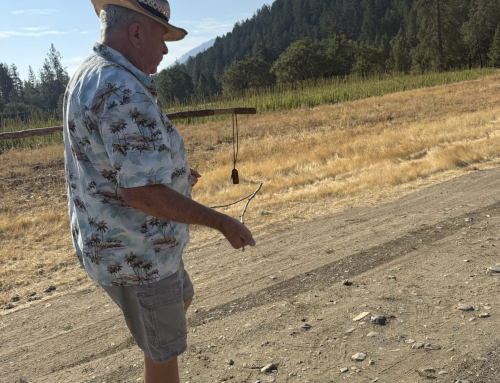
I wasn’t patient enough to wait for the glow plugs to finish their thing before I fired up the truck to follow them out to the spot Ed Ownbey had marked last Thursday. Parking, the drill rig had already pulled into place and deployed the boom to its upright position. As the first light began to change the hue around us from black to purple and then blue, the rig fired up just as the headlights from the farm crew turned into the employee parking area, letting out an initial release of diesel exhaust into the air, as the metal shaft touched the ground and sent a few rocks strewn across the surface tumbling.
Drilling a well is a special type of joy, pain and indecision. The price to drill a well is per foot, so as the drill twists into the ground your bill continues to go up, and going deeper doesn’t always equate to more water, but it certainly can. It’s a type of gambling, much like farming can be, with tangible results if all goes well, but a lot of risk and certainly no guarantees.
As the drill works through sections of drill pipe, they add sections of liner and metal well casing, driving it deep into the ground. Within 40′ we started seeing signs of water. Small amounts at first; we had anticipated needing to go 80-120′ deep to hit real, significant water. The team of 3 worked efficiently, drilling a section, bringing the next section of metal casing into place and welding it onto the piece below it before driving it deeper into the earth where the drill had opened space for it to live. At 120′ we had 20 gallons per minute. The well drillers were happy, and to some degree so was I, as we have 3 other wells on this property that together add up to about 5 gpm. Although it was the low end of Ed’s anticipated flow rate, it would still be a good well for the neighborhood. Talking to the team at Applegate Well Drilling, we decided we would go another 30′ or so for extra storage capacity in the well.
It took three rings for him to pick up. “Good morning Ed, it’s Jeff at Oshala, we hit 45 gallons per minute! At 140′ we tapped into another large section of water, releasing a steady flow of clean, clear water, with Total Dissolved Solids of 107.” That is 2,700 gallons per hour, 64,800 gallons per day of water. Ed expressed that he had been hoping for more but he was happy. He also had seen my story and was moved. We discussed him teaching a class at Oshala Farm in the near future and he said he would absolutely be delighted.
Wednesday afternoons is Applegate Valley Farmer’s Market and though often we are too tired or still too busy to make it, we found ourselves on the grass with neighbors and fellow farmers from across the valley. As the community danced barefoot along the banks of the river, the band kept time, and the children laughed and chased each other amongst their parents swaying and grooving to the music. My leg has been going numb if I stand still too long these days and I shift my weight and head to an empty bench to release some of what I’ve been carrying. Looking at the dance floor I see the signs were all too clear — sore backs, busted shoulders, wrist braces in place, the repetitiveness of our industry taking its toll on one body at a time.
This time of year is known as Angry August amongst farmers. A time of year where the injuries and pains have started adding up to the point where the struggle through the day to day is all too in your face, the end of the season is still too far away to get excited about and help you through the endless lists of tasks, and when the work is often too hot, or too smoky and often too heavy to always find enjoyable. It is a time of year when on every farm crew things start to break down, bodies are worn and patience starts to fray in the best of times.
Managing a season is like running a marathon, and as farm owners we are trying to get a whole squad across the finish line. Luckily, as a team, we can play off each other. Some pushing out front, others drafting.
Like any endurance race, typically you try to work a little less in the third quarter of the race so you have the juice you need to finish out strong. Normally we try to have a slight downturn in harvests at the end of August to allow the crew some rest before the heavy lifting of the root season. This year, with the loss of all our inventory to the fire, we are out harvesting as much as ever, doing our best to catch every little harvest possible to build up inventory before the window of the season closes.
Our crew has seen many Augusts before, and though this one is proving particularly challenging at the moment, we all know the season is closing in — the signs are here. As we headed into the weekend we breathed more and held gratitude and patience for each other. I knew what we needed more than anything was a good weekend for everyone to reset and rest.
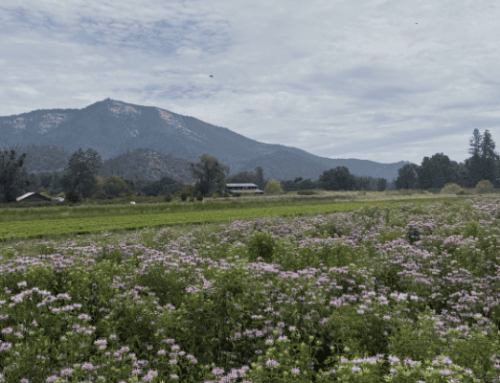
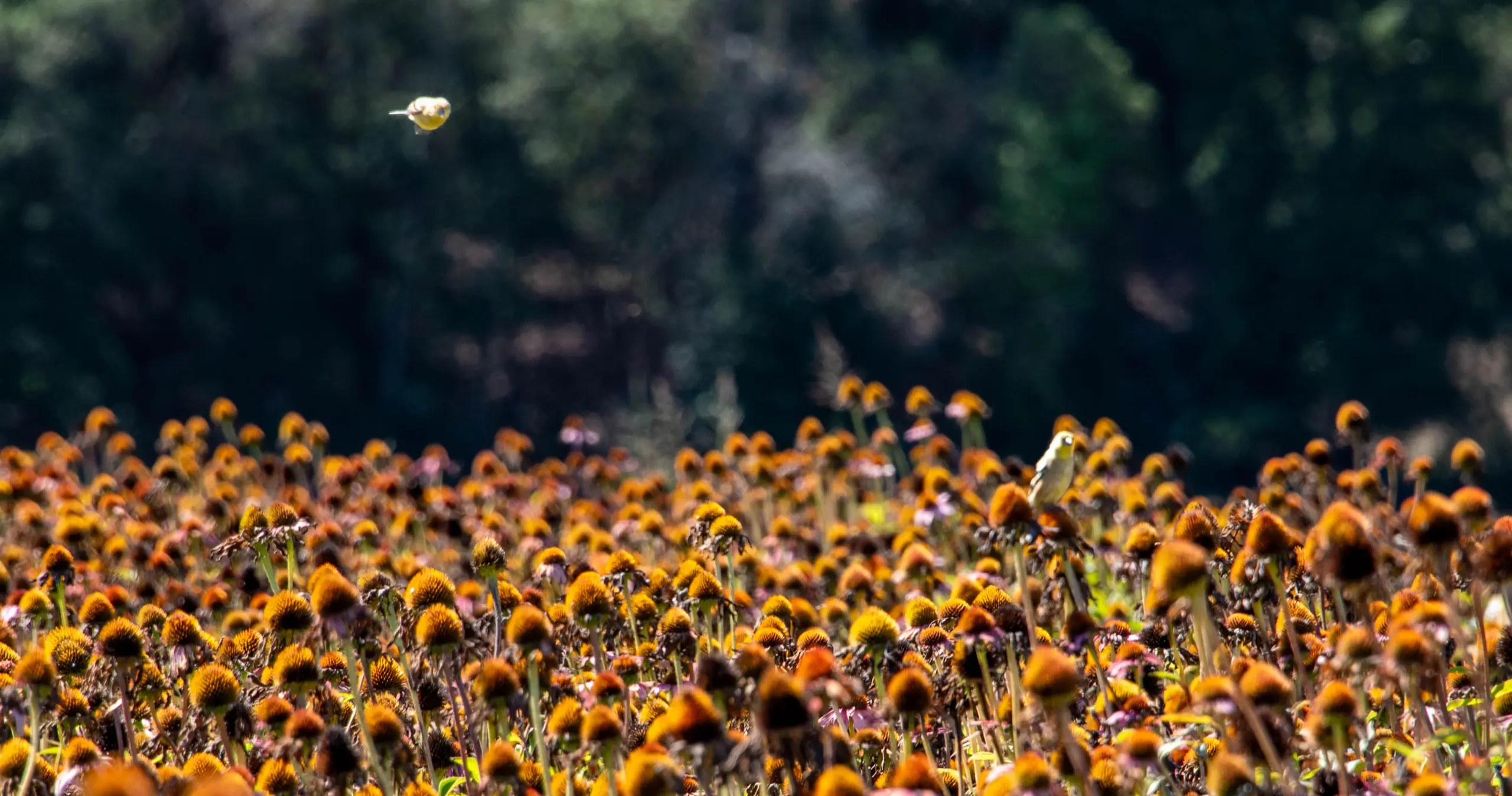
Sundays are the farmer’s day, the day most likely we have the farm completely to ourselves. Sitting on the back patio with our dog Juniper, I drink in the morning. My relationship with farming comes from the lens of an observer as much as a doer, and mornings like these are rich in observation. Without the background noise of a tractor, or the distraction of crew, the farm settles into a silence that allows the farmer to listen, to see, to feel. The silence is often overwhelming. The Goldfinches have arrived by the tens of thousands, their cheerful peeps carrying on the morning breeze. The Oregon Myrtle, which would have been known as a California Bay a mere 7 miles to the south, was alive with their song, though for the most part the thick green leaves were hiding them in the thick interior.
The Crows have left for the time being. They arrive on the wings of the cherry harvest, announcing the ripening of the first fruit in the high branches facing southwest. By the time the plums have fallen, the Crows have left, until the wild grapes come ripe along the river, and typically with them the Lazuli Buntings, who have finished their breeding season in the brush and brambles, their brilliant blue reflected in their song now gone.
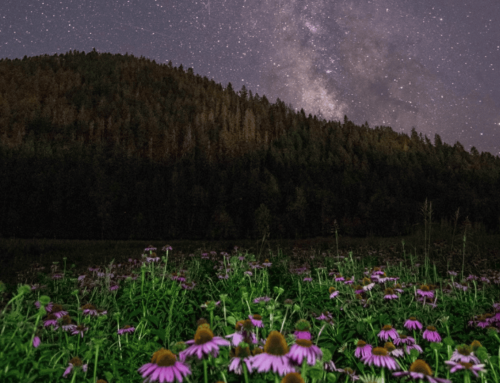
Suddenly, an explosion rises off the echinacea purpurea field, where thousands upon thousands of Goldfinch take flight at once, forming a cloud of birds that reminds me of schooling fish in the ocean creating a bait ball and then forming out of it in a spiral, as if mimicking a tornado of wings and wind, before spilling out the top to redistribute over the field of echinacea once again. The first seed must be coming ripe in the echinacea, making a mental note to schedule the seed harvest.
In 2014 we did a Kickstarter campaign to build our first drying barn. We were trying to raise $50,000 to turn an existing hay barn into a 3-bay dryer barn. Many, many people contributed to that campaign, including a woman we didn’t know named Patti. At the last minute we were $10,000 short on our campaign, and Kickstarter is an all-or-nothing fundraiser — if you don’t hit your goal, you don’t get anything. We were stressing, and more importantly as the clock was winding down, we were coming up short. Suddenly, from across the country, a donation came in from someone we didn’t know, and to this day, she continues to be a north star for us as an example of selflessness and philanthropy.
On Thursday at 6 am the first of the concrete began to pour. We had slightly widened and lengthened the slab that was left from what we have always called Patti’s Dryer. Five trucks later, we had a beautiful new concrete slab where the old one had sat, pockmarked with holes where the concrete had heated up and caused spalling, as moisture pulls from the concrete and causes the surface to pop, reducing the integrity of it. Where once stood this dryer will now stand a new processing barn, where we can do destemming, as well as cutting and sifting of our herbs. A new destemming machine is en route from Serbia and will need a home when it arrives — we’ve already located and purchased a cutter and a sifter to replace the ones we had, both one size larger to accommodate our growing farm, not just replace what we lost. Patti’s Processing Barn will be the first of many buildings we will be building over the coming months and years.
The framers/carpenters are lined up to start construction this coming week. Within the next few weeks this building will come from idea to completion, in time for the equipment to land safely in its new home, which couldn’t be soon enough. We have been super busy harvesting, but so much of what we sell needs to be further worked — removing leaf from stem, or cutting roots to a more manageable size for our clients’ needs. Our temporary storage space is filling fast.
The first of the dragonflies have begun to arrive. Not in huge numbers, but they are starting to come nonetheless, feasting on the minutiae of small lives that have exploded from the fields these late summer afternoons, as the sun sets and the heat coming off the field sends them cascading into the sky in clouds above the farm, dancing clouds, and the dragonflies swooping through like fighter jets, and soon after them the swallows too, both feasting on the glut of late summer.
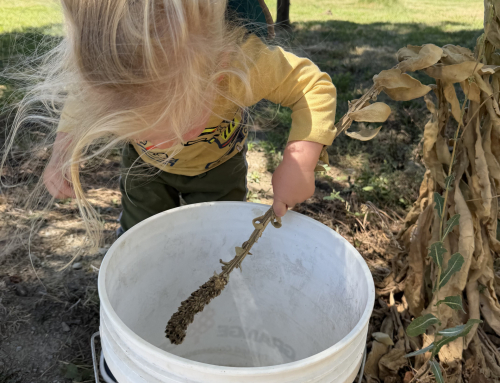
As Sunday morning turns into Sunday day and then afternoon, the text messages start coming in. The crew checking on any changes in plans, making sure I have moved the equipment they need to hit the ground running tomorrow. Sounds like they got some rest this weekend, or maybe they too just know that the season is closing in on us and there is still a long list of harvests ahead. This week more yarrow, motherwort, calendula, catnip, skullcap, nettle seed, lemon balm, anise hyssop and mullein leaf. As Elise and I walk out to the field as the sun begins to set, Juniper underfoot, the birds take flight as we approach — oh yes, the echinacea seed as well!
At the door to Patti’s Dryer there hung a plaque with a quote:
“To forget how to dig the earth
and to tend the soil
is to forget ourselves.” – Gandhi
How You Can Continue to Stand With Oshala
Many of you have reached out asking how you can continue to help, and we’re so grateful.
If you’d like to support our rebuilding efforts financially, you can contribute to our fundraiser, which is helping us replace essential infrastructure, equipment, and keep our incredible team working as we rebuild.
→ Donate to Help Rebuild Oshala Farm
If you’d like to offer equipment, materials, volunteer time, professional services, or another form of support, we’ve also created an Offer Support to Oshala Farm form where you can let us know how you’d like to help.
→ Offer Support to Oshala Farm
And if donating isn’t possible, sharing our story with your friends, family, and community continues to make an enormous difference.